
INTERNATIONAL GROWTH READINESS PROGRAMME
Helping SMEs make better decisions about markets, customers, positioning and Route to Market.
A practical, decision-oriented programme for SME managers and the organisations that support them.
Assess readiness, strengthen competitiveness, prioritise export markets, understand customers, sharpen positioning, design a practical Route to Market and turn decisions into action. For SME support organisations, the programme also strengthens adviser capabilities and practical enterprise-support services.
Better decisions. Stronger enterprises. Sustainable international growth.

30+ years of
management and advisory experience

16 years with
ITC – UNCTAD/WTO

Experience across
43+ country contexts

Enterprise competitiveness
and international growth

Institutional Capacity Building,
training and facilitation
THE INTERNATIONAL GROWTH CHALLENGE
Exporting is not a destination. It is a series of decisions
International growth does not begin with a list of attractive countries. It begins with a clear understanding of the company, the business it is seeking to grow, its customers, capabilities and resources, and the opportunities where that business can compete successfully and sustainably.
– Is the company ready—and does the business have a competitive basis—for international growth?
– Which export markets should the business prioritise?
– Which customers should the business serve?
– How should it configure and position its offer?
– What Route to Market should it choose?
– How can its decisions be translated into a practical implementation plan?
The International Growth Readiness Programme helps SME managers address these questions through a coherent and practical decision-making process, while equipping support organisations and advisers with the frameworks and capabilities to guide SMEs more effectively.
WHO THE PROGRAMME IS FOR
Supporting SMEs—and the organisations that support them
The programme can be delivered directly to SME managers or adapted for organisations seeking to strengthen the quality and impact of their SME support services.
For SMEs and management teams
For companies seeking to strengthen competitiveness, prepare for international growth, enter new export markets or review and improve an existing export business plan.
The programme is particularly relevant for:
SME owners, managing directors and management teams
Export, international business and commercial managers
Companies assessing their international growth readiness and competitiveness
Companies selecting or reviewing priority export markets
Companies seeking to understand customers and strengthen positioning
Companies designing a practical Route to Market and implementation plan
Participants leave with clearer decisions on readiness, competitiveness, priority markets, customers, positioning and Route to Market—and a practical understanding of the capabilities, resources and actions required for implementation.
For development programmes and SME support organisations
For institutions designing, commissioning or delivering practical competitiveness, international growth and export-development support to SMEs.
The programme is relevant for:
Development programmes and donor-funded initiatives
Export Promotion Organisations and trade-support institutions
Chambers of Commerce and business associations
Business Support Organisations and SME development agencies
Consultants, SME advisers, trainers and facilitators
Universities, business schools and enterprise-development projects
The programme strengthens institutional Capacity Building, adviser development, Training-of-Trainers, facilitation and sustainable enterprise-support services—including initiatives serving women-led businesses, young entrepreneurs and other underserved enterprise groups.
A STRUCTURED LEARNING JOURNEY
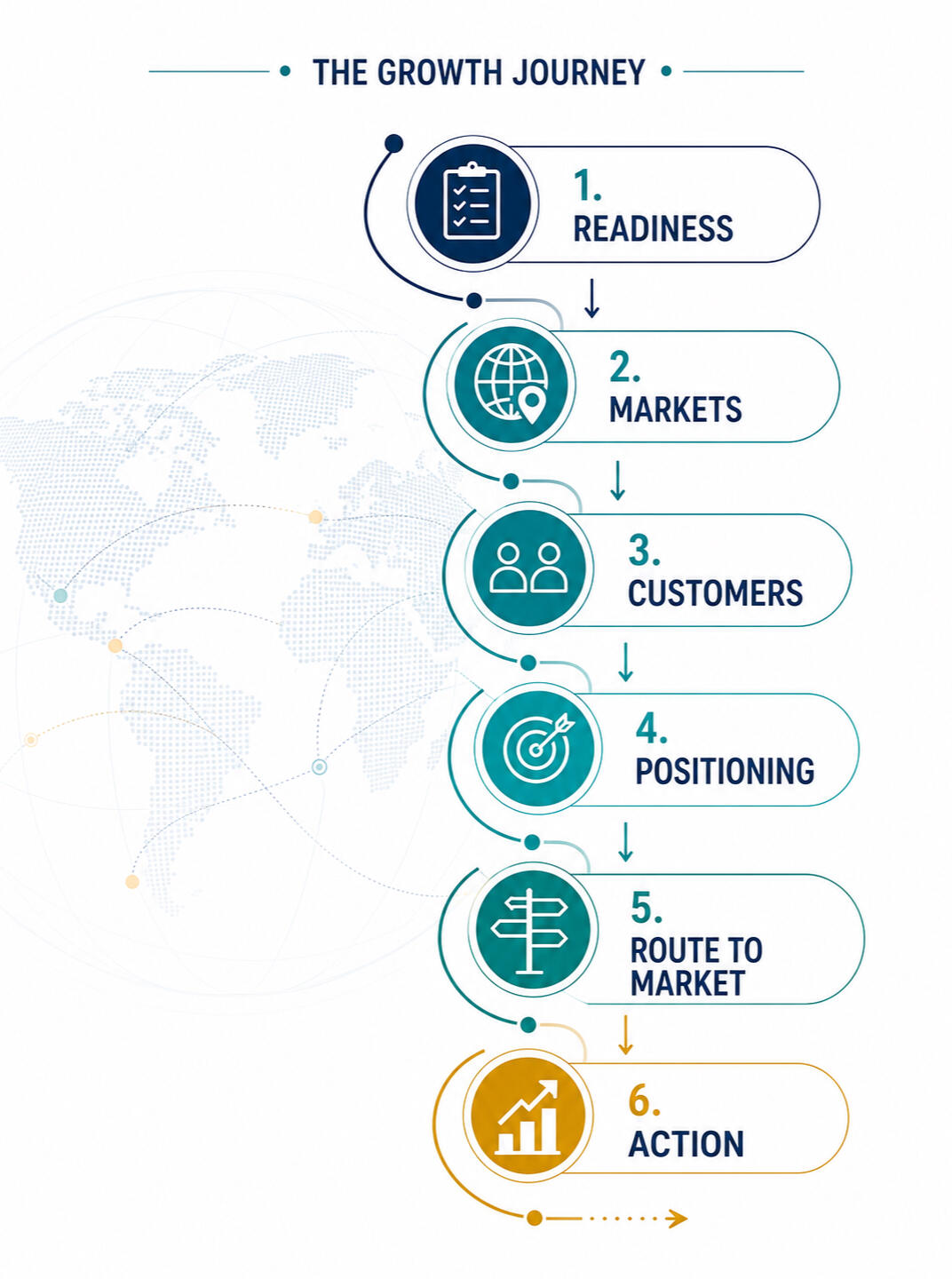
From readiness to action
The programme follows a connected sequence of business and management decisions, moving from readiness and competitiveness to focused international growth and practical implementation.
01 . READINESS
Assess the company’s objectives, the competitiveness of the business, and the capabilities, resources and organisational preparedness required for international growth.
02 . MARKETS
Identify, compare and prioritise export markets where the business has a realistic and sustainable basis for competing.
03 . CUSTOMERS
Understand customer needs, expected outcomes, habits and buying occasions, and identify meaningful priority segments.
04 . POSITIONING
Configure and position the offer to address priority customer needs and competitor gaps in a way the business can deliver consistently.
05 . ROUTE TO MARKET
Determine how the business will communicate with customers, reach them, distribute its offer and generate orders.
06 . ACTION
Translate the decisions into a practical implementation plan supported by the required capabilities, resources, responsibilities and priorities.
WHAT MAKES THE PROGRAMME DISTINCTIVE
More than generic export training
The programme combines practical international business tools with a disciplined approach to defining the business, understanding customers, configuring the offer and building the capabilities required to compete and deliver consistently.
Business Definition
What a company produces is not necessarily what its customers are buying.
A business should not be defined only by what the company produces. It must also consider whom it serves, which customer needs it addresses and what provides a meaningful basis for differentiation.
A clear business definition guides which customers the business studies, which competitors it recognises, which offers it develops, which capabilities it builds and where the company allocates scarce resources.
Needs-Based Segmentation — NEHO
Customers who look similar may buy for completely different reasons.
The NEHO framework identifies meaningful customer segments through:
Needs
Expected Outcomes
Habits
Occasions
It moves segmentation beyond geography, demographics, industry or company size and focuses instead on the reasons customers choose, buy and use an offer.
Positioning
Positioning is not simply a slogan or a statement about how a company wants its offer to be perceived.
Positioning is the deliberate configuration of the offer to address unmet customer needs and competitor gaps, supported by the capabilities required to deliver it consistently.
Positioning may involve:
Cost
Quantity
Quality
Time and place
Product or service features
Sales conditions
PROGRAMME STRUCTURE
Eight connected modules
The modules can be delivered as a complete learning journey for SMEs and management teams or adapted to the objectives of a particular SME group, institution, development programme or Capacity Building initiative.
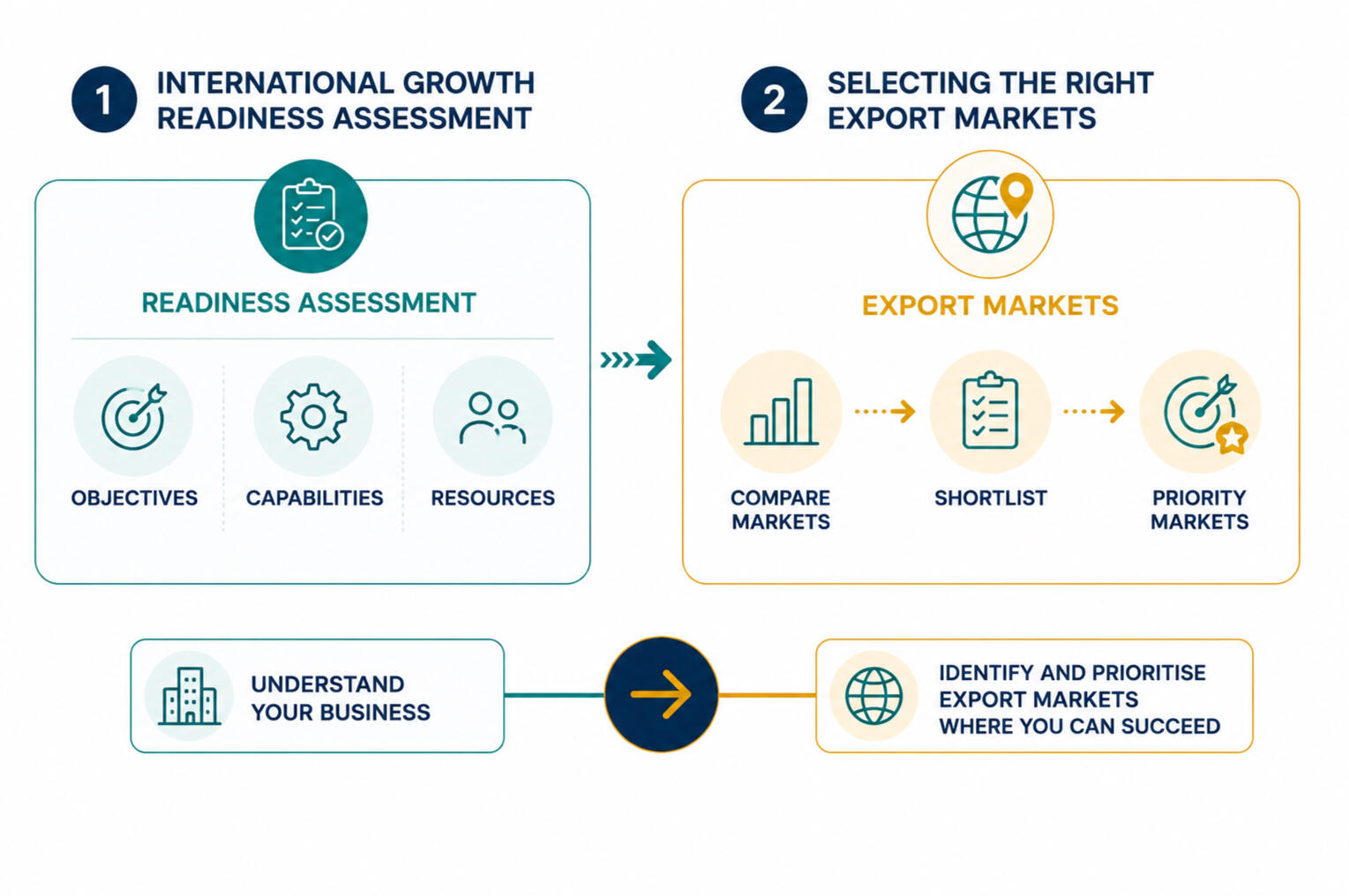
1. International Growth Readiness Assessment
Assess the company’s objectives, the competitiveness of the business, export experience, capabilities, resources and organisational preparedness before committing to international growth.
2. Selecting the Right Export Markets
Develop a structured basis for identifying, comparing and prioritising export markets where the business has a realistic and sustainable basis for competing.
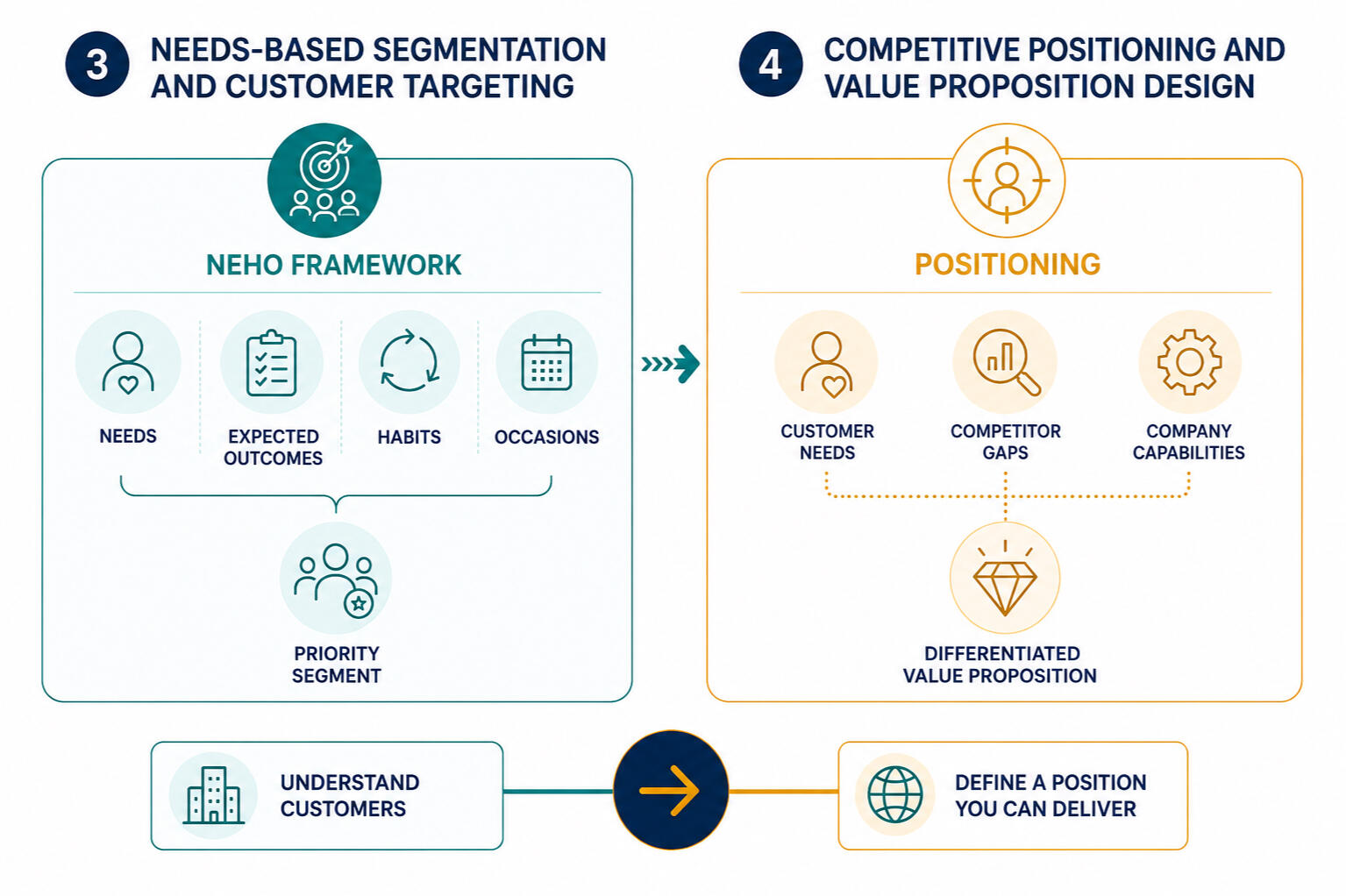
3. Needs-Based Segmentation and Customer Targeting
Identify meaningful customer groups by examining their needs, expected outcomes, habits and buying occasions.
4. Competitive Positioning and Value Proposition Design
Define how the offer will address priority customer needs and competitor gaps, and determine the capabilities the company must build or mobilise to deliver that position consistently.
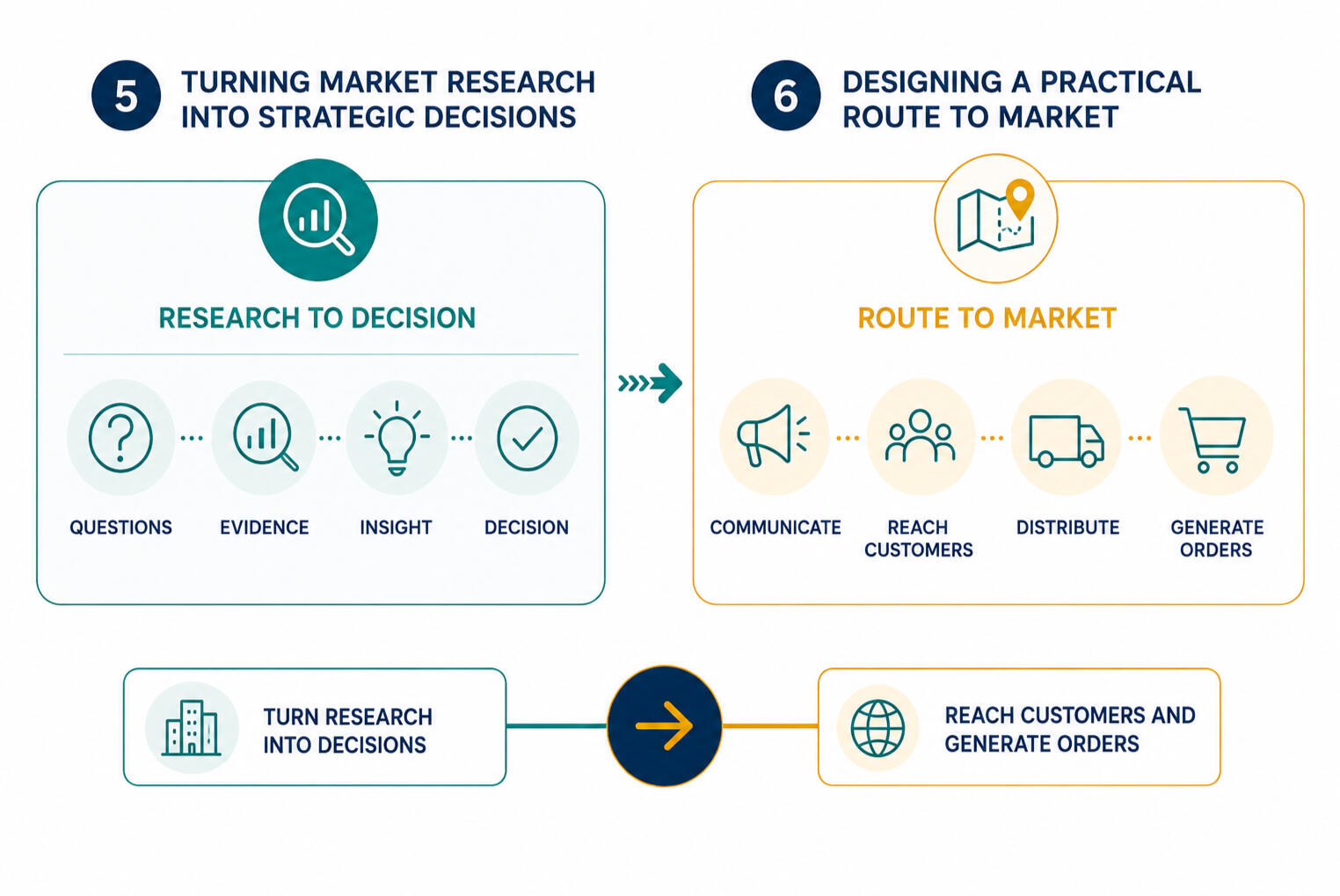
5. Turning Market Research into Strategic Decisions
Define information requirements, distinguish useful evidence from general market data and convert research findings into practical business decisions.
6. Designing a Practical Route to Market
Determine how the business will communicate its offer, reach customers, manage distribution and generate orders in priority markets.
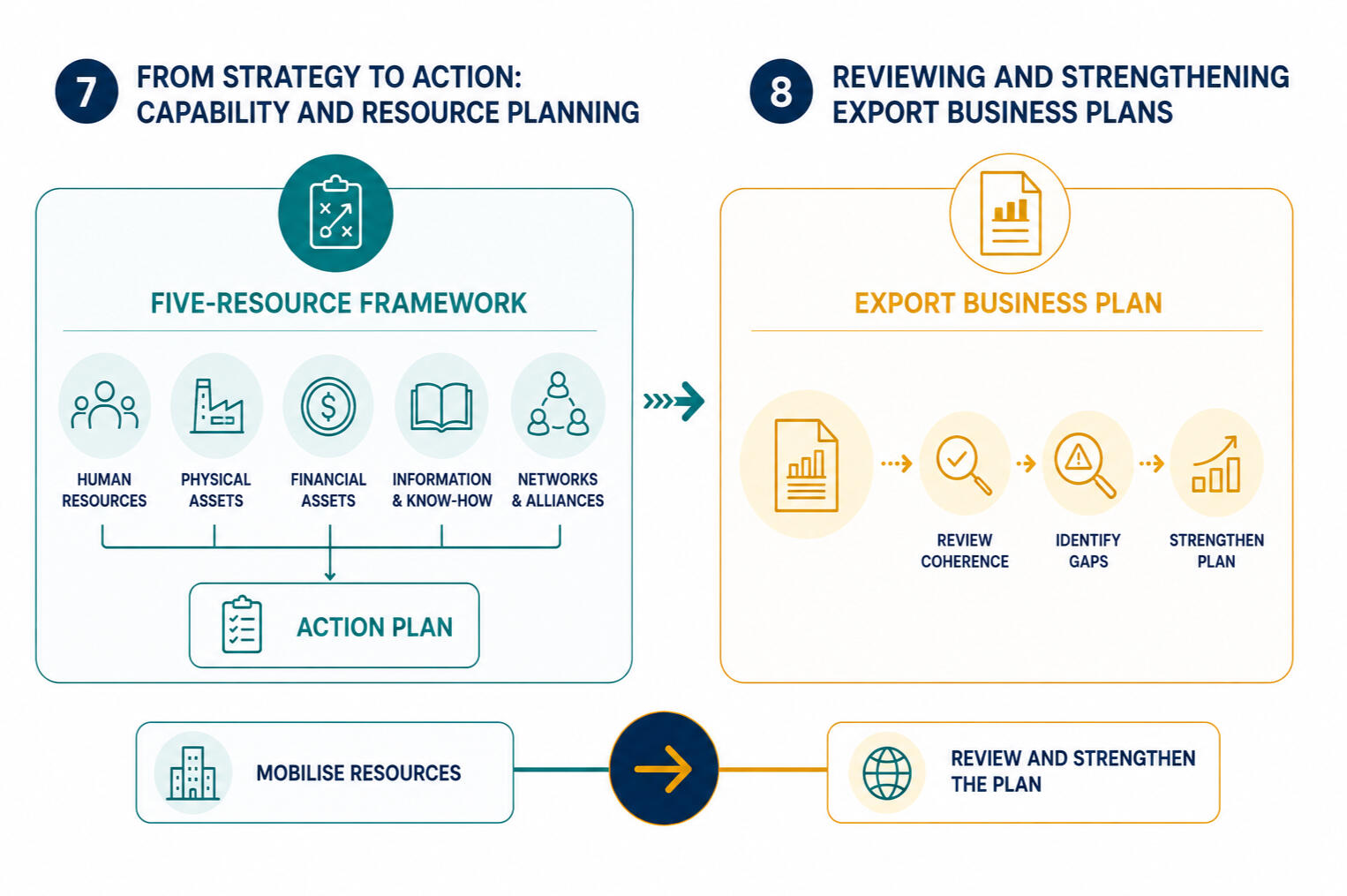
7. From Strategy to Action: Capability and Resource Planning
Identify the capabilities, responsibilities and resources the company must mobilise to implement the business’s international growth decisions.The five-resource framework:
Human Resources
Physical Assets
Financial Assets
Information and Know-how
Networks and Alliances
8. Reviewing and Strengthening Export Business Plans
Review the coherence of the business and management decisions, identify gaps and strengthen the export business plan as a practical guide for implementation.
FLEXIBLE DELIVERY
Adapted to participants, organisations and programme objectives
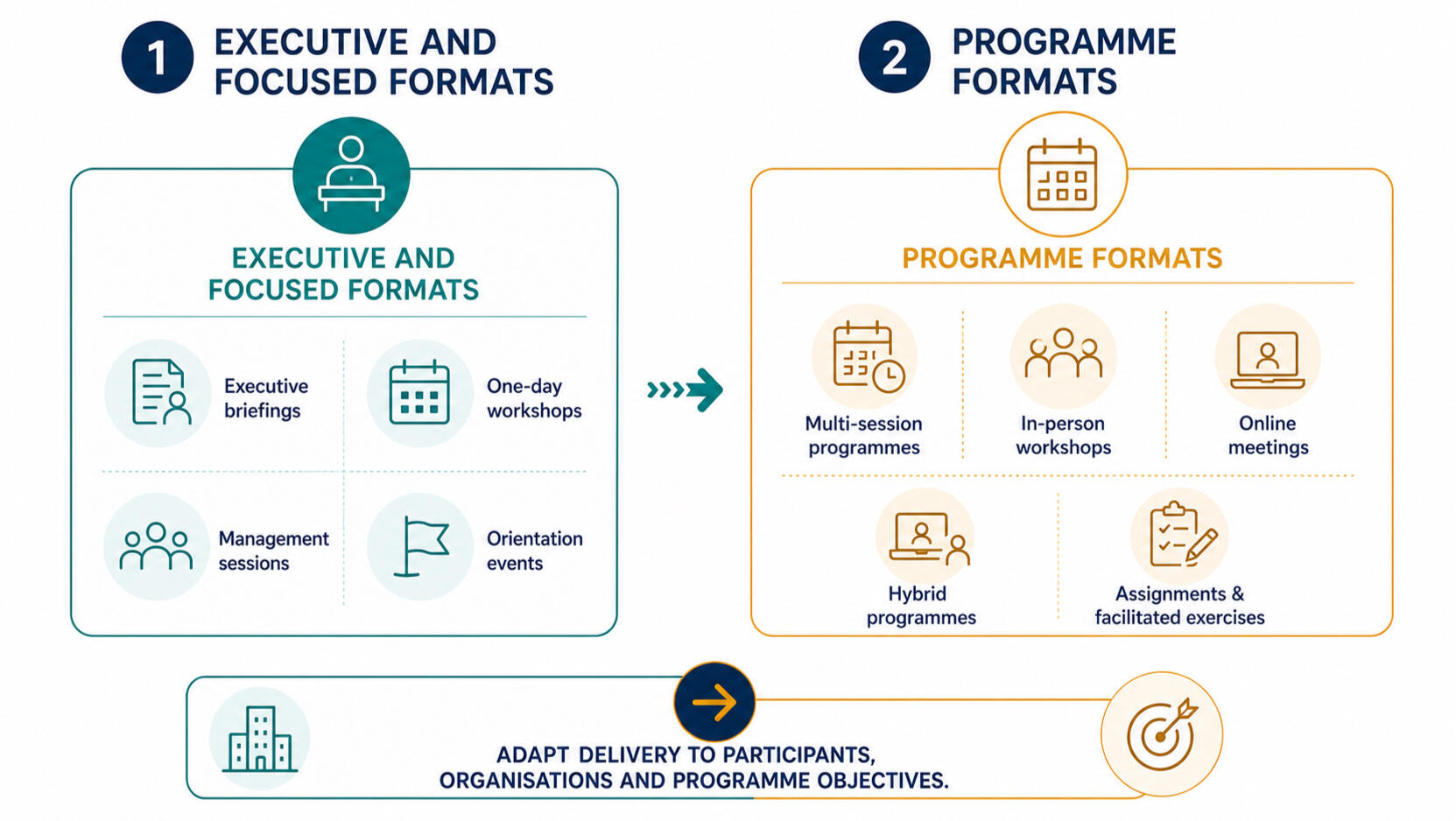
The International Growth Readiness Programme can be delivered in different formats for SMEs, management teams and support organisations while preserving the coherence of the methodology, decision journey and practical application.
Executive and focused formats
Executive briefings
Focused one-day workshops
Management strategy sessions
Programme orientation and stakeholder briefings
Programme formats
Multi-session learning programmes
In-person workshops
Online workshops and advisory meetings
Hybrid programmes
Applied assignments and facilitated exercises
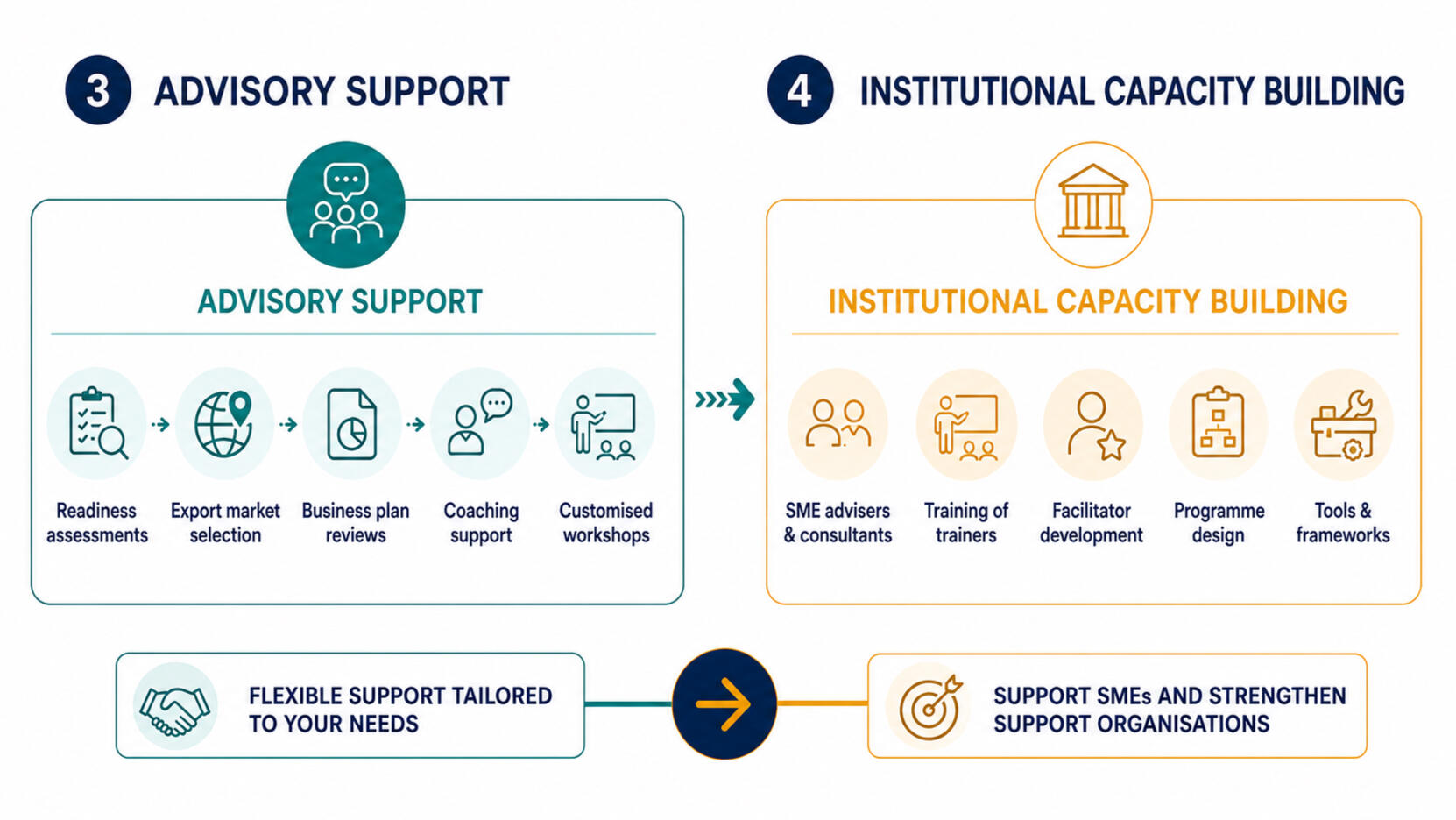
Advisory support
International Growth Readiness Assessments
Competitiveness and international growth advisory
Export market selection assignments
Export business plan reviews
Customised management workshops and coaching
Institutional Capacity Building
Capacity Building for SME advisers, consultants and institutional teams
Training-of-Trainers
Facilitator and adviser development
Institutional programme and enterprise-support service design
Tools and frameworks for supporting SME decision-making
The scope, duration and delivery format can be adapted to participant profiles, the needs of SME management teams, the composition of the SME portfolio and the institutional objectives of the commissioning organisation.
ABOUT THE PROGRAMME ADVISER
Gültekin Özaltınordu
Enterprise Competitiveness & International Growth Adviser
SME Strategy · Export Readiness · Market Development · Institutional Capacity Building

Gültekin Özaltınordu advises enterprises, management teams and SME-support institutions on competitiveness, international growth and the capabilities required to translate strategy into practical results.
His experience combines 14 years of private-sector management, 16 years at the International Trade Centre – UNCTAD/WTO (ITC), and subsequent international consulting assignments across 43 country contexts. This background gives him a practical understanding of business and management decision-making, as well as the institutional systems that support SME development.
In his work with SMEs and management teams, he covers international growth readiness, business definition, export market selection, customer and needs-based segmentation, positioning and value proposition, Route to Market, capability and resource planning, and the review and strengthening of export business plans.
At institutional level, he works with development programmes, Export Promotion Organisations, Chambers of Commerce and other Business Support Organisations to strengthen adviser capabilities, develop Training-of-Trainers and facilitator programmes, and design practical and sustainable enterprise-support services.
Enterprise Competitiveness | International Growth Strategy | SME Development | Market Development
Export Readiness | Route to Market | Institutional Capacity Building | Adviser Development
PROGRAMME RESOURCES
Explore the programme and methodology
These resources provide an overview of the programme and introduce selected elements of the methodology used to strengthen business competitiveness and international growth decision-making.
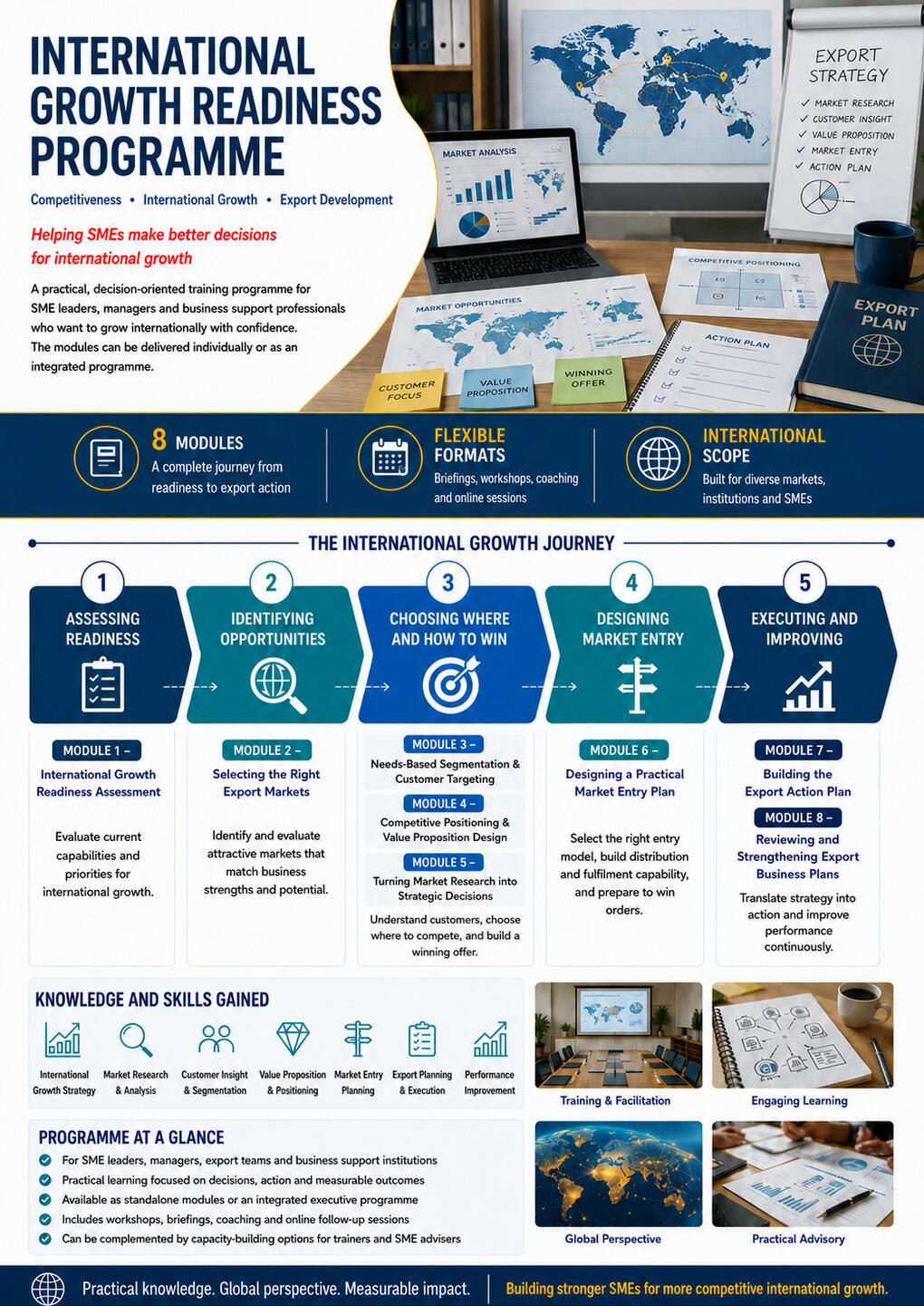
International Growth Readiness Programme Brochure
A comprehensive overview of the programme’s methodology, eight connected modules, target audiences, delivery formats and application with SMEs, management teams and support organisations.
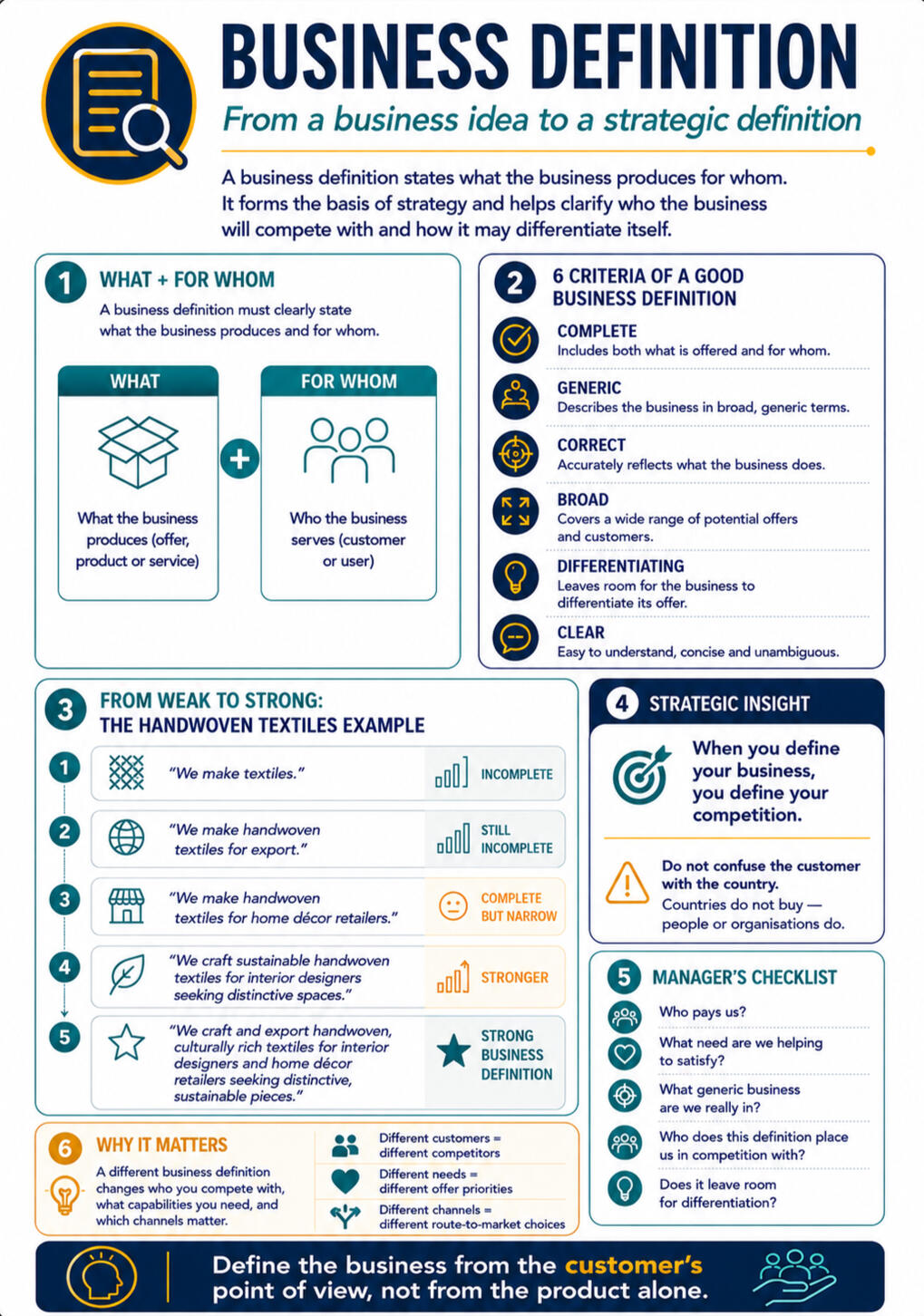
Business Definition
A learner-friendly introduction to defining a business through the customers it serves, the needs it addresses and the basis on which it competes—not simply by what the company produces.
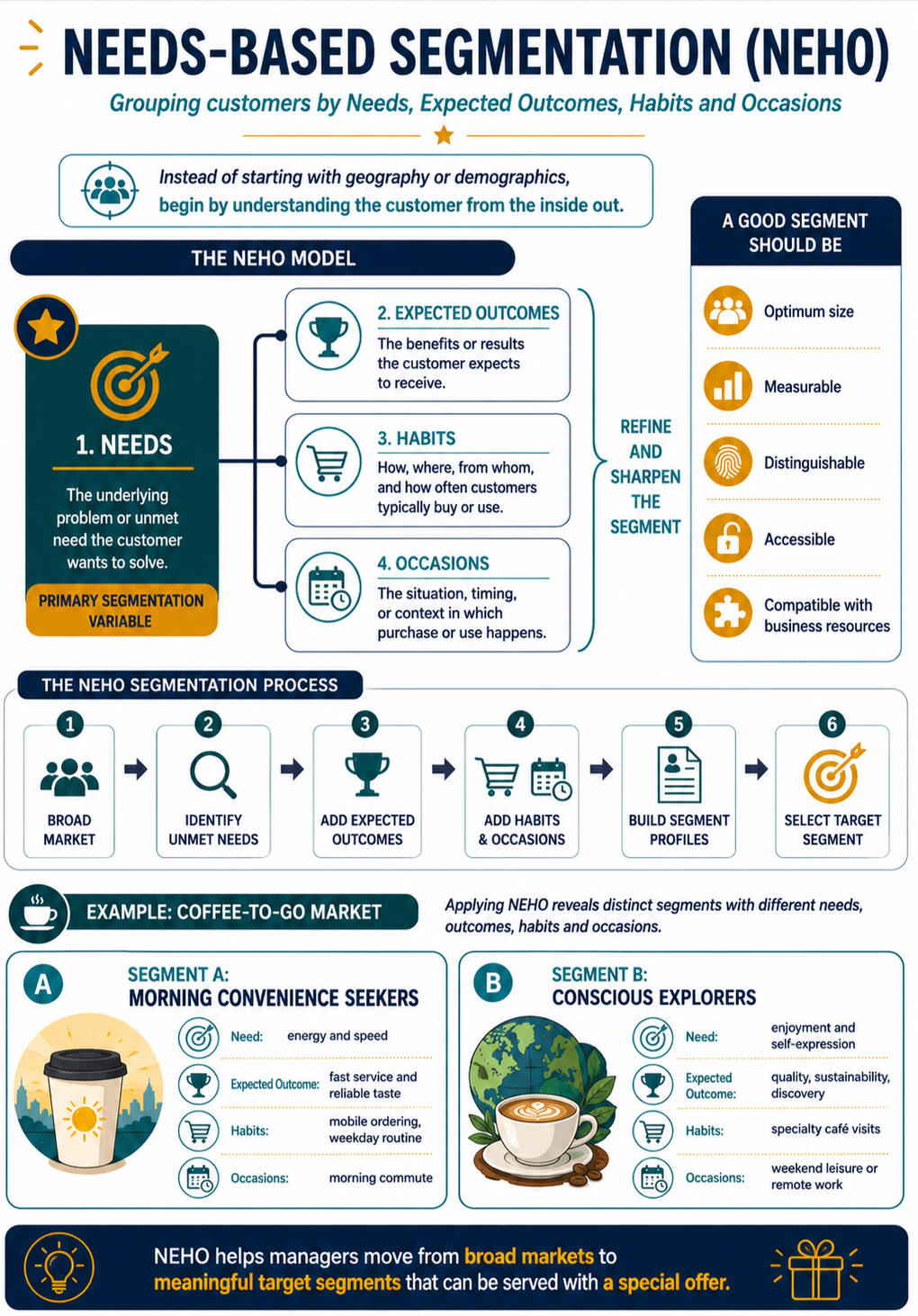
Needs-Based Segmentation — NEHO
A practical introduction to identifying meaningful customer segments through Needs, Expected Outcomes, Habits and Occasions.
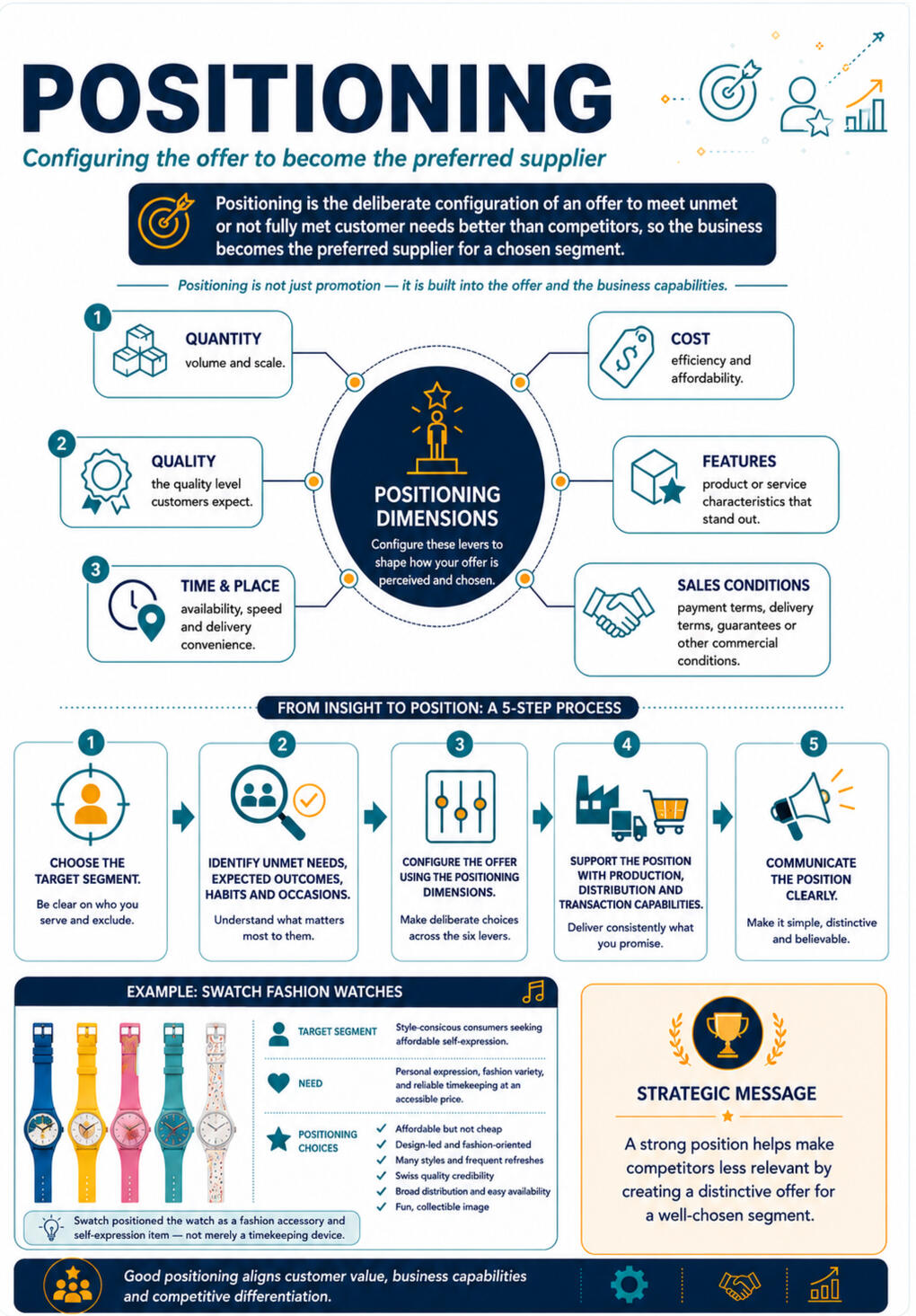
Positioning
An explanation of positioning as the deliberate configuration of an offer to address unmet customer needs and competitor gaps in a way the business can deliver consistently.
DISCUSS A PROGRAMME
Interested in strengthening enterprise competitiveness and international growth?
Let us explore how the International Growth Readiness Programme could support your SME management teams, adviser network, enterprise-support services, training initiative or development programme.
The programme can be delivered as a complete learning journey or tailored around selected business priorities, institutional objectives, participant groups and delivery formats.
Gültekin Özaltınordu
Enterprise Competitiveness & International Growth Adviser
DIRECT CONTACT
SEND AN ENQUIRY
Tell me briefly about your organisation and what you would like to discuss.
The information you provide will be used only to review and respond to your enquiry. It will not be added to a mailing list or used for unrelated marketing.
Gültekin Özaltınordu
Enterprise Competitiveness & International Growth Adviser
International Growth Readiness Programme
PRACTICAL. STRATEGIC. RESULTS-ORIENTED.
© 2026 Gültekin Özaltınordu. All rights reserved.